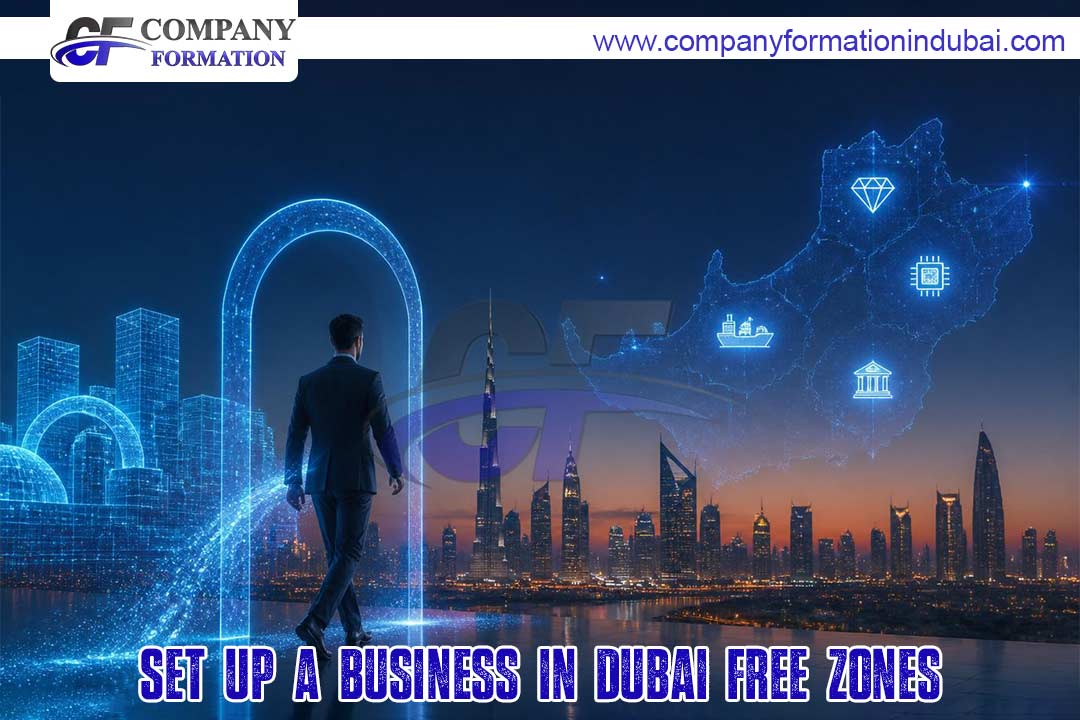
Dubai free zone are really places for people who want to start a business in the UAE.They are very attractive to people who want to begin a company, to startups, and to investors from other countries.The Dubai free zones have a lot of things about them.For example, people from countries can own a business completely by themselves in the Dubai free zones.The Dubai free zones also have tax rules, and it is easy to get a license to do business.The Dubai free zones have very good roads and buildings and other important things that companies need.This makes it easy for companies of all sizes to do business in the Dubai zones.If you want to start a technology company or a company that buys and sells things or a company that provides services to people, the Dubaifree zones are a great place to do that.The Dubai free zones give people the freedom to start a business quickly and to make it bigger with confidence.The Dubai free zones are a place for Dubai free zones to help people start a business and make it successful.The Dubai free zones provide a lot of help to people who want to start a business in the Dubai zones.
How to Set Up a Business in Dubai Free Zones — The 2026 Complete Guide
Dubai’s Free Zones (also called Free Trade Zones) are purpose-built business hubs offering international investors a streamlined path to company formation. With advantages like 100% foreign ownership, long-term tax exemptions, modern infrastructure, and fast licensing, free zones are a top choice for startups, scale-ups, and global enterprises. This guide explains what free zones are and why you might choose one; lists major Dubai free zones; outlines costs, legal forms, step-by-step formation procedures, common challenges, future trends, and practical tips to start quickly and confidently.
What is a Dubai Free Zone?
A Dubai Free Zone is an area where businesses can operate with different rules than the rest of the United Arab Emirates. These areas are made to get people from countries to invest in the United Arab Emirates by giving them good deals. For example, people from countries can own businesses in a Dubai Free Zone completely; they do not have to pay as much tax, it is easy to set up a business, and they get special facilities.
Many Dubai Free Zones focus on things like technology, media, logistics, finance, healthcare, manufacturing, and more. This means they have services and chances to meet people who work in the field, such as the businesses in the Dubai Free Zone.
Why Choose a Dubai Free Zone?
Key benefits that make Dubai free zones attractive:
- 100% foreign ownership: No local partner required; you retain full control.
- Tax advantages: Corporate tax holidays or exemptions for long periods, depending on the zone and business activity.
- Simplified setup: Faster registration and licensing compared with mainland procedures.
- Modern infrastructure: Ready-to-use offices, warehouses, logistics, and tech-enabled facilities.
- Strategic location: Dubai’s position between Europe, Asia, and Africa supports international trade.
- Duty-free import/export for most goods moved in and out of the zone.
- Fast visa processing: Employee and investor visas can be issued quickly through the zone authority.
- Access to international talent and frequent networking events.
- Flexible office solutions: From virtual offices and flexi-desks to full private offices and warehouses.
Free Zone vs Mainland — Quick Comparison
Ownership of a business in the Free Zone is totally free for foreigners; it is one hundred percent foreign. On the mainland you usually need a partner, but there are some new laws that let you have full ownership of certain things.
The scope of your business is different in the Free Zone and the Mainland. In the free zone, you can do trade inside the zone. Also with other countries. On the mainland you can operate your business anywhere in the United Arab Emirates.
When it comes to taxes, the Free Zone has some tax incentives. This means you can save some money on taxes. On the mainland you have to pay corporate tax.
If you want to set up an office, the Free Zone is very flexible. You can have an office or a private office; it is up to you. On the mainland you usually need to have an office.
The process of setting up a business is also different. In the free zone, it is generally faster and more streamlined. This means it is easier to start your business in the Free Zone. The Free Zone business setup process is faster. The mainland business setup process is not as fast as the Free Zone business setup process. The Free Zone is an option if you want to start your business quickly.
Major Dubai Free Zones (Top Picks for 2026)
Ownership of a business in Dubai can be totally free if you are in a free zone, which means the business is 100 per cent owned by foreigners. However, if you are in the mainland area, you usually need a partner unless the new laws say you do not need one.
Here are some popular Free Zones in Dubai that are great for industries:
DMCC, which is also known as the Dubai Multi Commodities Centre, is perfect for trading commodities. It is actually the free zone in the world when it comes to the number of companies. DMCC is great for people who want to trade gold, diamonds and tea. It is also a good place for startups and big companies to have their headquarters.
DSO, which stands for Dubai Silicon Oasis, is a hub for technology and innovation. It is a place for companies that deal with software, hardware and research and development.
JAFZA, or the Jebel Ali Free Zone, is all about logistics, manufacturing and trade. It is located next to the Jebel Ali Port and the Al Maktoum International Airport, which makes it very convenient.
DAFZA, which is the Dubai Airport Free Zone, is focused on aviation, logistics and international trade. It is perfect for companies that deal with air cargo.
DHCC, or the Dubai Healthcare City, is about healthcare, medical services and medical tourism. It is a place for clinics, laboratories and pharmaceutical companies.
DIC, which stands for Dubai Internet City, is focused on information technology and digital services. It is home to big technology companies from around the world.
DMC, or the Dubai Media City, is all about media, advertising and entertainment. It is a place for creative industries and broadcasters.
Dubai South is a free zone that is focused on logistics, e-commerce and aerospace. It is built around the Al Maktoum International Airport.
DIFC, or the Dubai International Financial Centre, is all about finance and financial technology. It has its rules and laws.
The D3, or the Dubai Design District, is focused on fashion, luxury and creative industries. It is a community that’s all about design.
IMPZ, which stands for the International Media Production Zone, is about film, animation and content production facilities.
DSP, or the Dubai Science Park, is focused on life sciences, biotechnology, environmental technology and pharmaceutical services.
DKP, which stands for the Dubai Knowledge Park, is about education, training and human resources development.
The Dubai Industrial City is focused on industry, manufacturing and warehousing.
The Dubai Maritime City is about maritime, shipping and marine services.
The GD Dubai, or the Gold and Diamond Park, is focused on jewellery and precious metals trading.
The DFP, or the Dubai Food Park, is about food manufacturing, processing and packaging.
Note: Dubai has many specialized free zones; choose one that aligns with your sector for tailored benefits.
Types of Licenses in Free Zones
Free zone licensing depends on permitted activities. Common license types include:
- Commercial license: Trading and general business activities.
- Industrial/manufacturing license: Production and factory operations.
- Professional license: Consultanhttps://translate.google.com/cy, specialized services, and skilled professionals.
- E‑commerce license: Online trading and digital retail.
- Media license: Broadcasting, publishing, film, and content creation.
- Freelancer permit: For individual professionals working independently.
- Educational and health licenses: For institutions and medical providers.
Each license defines exactly which activities you can perform; always confirm permitted activities with the free zone authority before applying.
Legal Entities and Structures
Choose a legal structure based on ownership, liability, and future goals:
- FZE (Free Zone Establishment): Single shareholder entity, limited liability.
- FZCO (Free Zone Company): Multiple shareholders (2+), limited liability.
- Branch office: Extension of a foreign parent company—no separate local entity required.
- Representative office: Marketing and liaison office; cannot carry out commercial sales.
- Holding company: Holds shares in other companies, useful for group structures and investments.
Match the entity to your capital needs, number of owners, and intended business scope.
Costs — What to Budget For
Costs vary widely by free zone, license type, office choice, and visa requirements. Typical components:
- Free zone setup/registration fees: Starting points vary (examples: JAFZA from ~5,000 AED; DSO from ~11,900 AED; DMCC and DAFZA higher).
- License fees: Rough ranges — Professional: 7,000–20,000 AED; Commercial: 10,000–30,000 AED; Industrial: 15,000–50,000 AED; E‑commerce: 5,000–15,000 AED; Freelancer: 3,000–10,000 AED.
- Office space: Flexi-desk 10,000–20,000 AED/year; Shared office 20,000–50,000 AED/year; Private office 50,000–200,000 AED/year.
- Visa costs: Employment visa 3,000–7,000 AED each; Investor visa 4,000–8,000 AED; Family visa 2,500–5,000 AED.
- Bank account setup and maintenance: 1,000–5,000 AED (varies between banks).
- Legal and consultancy fees: 2,000–10,000 AED depending on complexity.
- Renewal: Annual renewals typically cost 10–20% of initial setup costs (varies by zone).
Example: Small e‑commerce setup in DSO - Setup fee: 11,900 AED
- E‑commerce license: 10,000 AED
- Flexi-desk: 15,000 AED/year
- 2 employee visas: 7,000 AED
- Bank setup and legal fees: 5,000 AED
Estimated first-year cost: ~48,900 AED (illustrative; confirm current fees with the chosen free zone).
Step-by-Step Company Formation Process
Step 1
Choose the right free zone: Match industry focus, cost, location (port/airport access), and services.
Step 2
Define your business activity: Pick activities precisely—each activity must be allowed under the selected license.
Step 3
Select the legal entity: FZE, FZCO, branch, representative office, or holding company.
Step 4
Register trade name: Follow UAE naming rules and get the name pre-approved by the free zone authority.
Step 5
Apply for pre-approvals and submit documents: Typical documents include passport copies, proof of address, business plan (for some licenses), and shareholder documents.
Step 6
Sign lease and office agreement: Choose flexi-desk, shared office, or private office depending on visa needs and operations.
Step 7
Obtain initial approvals and business license: After document checks and payments, the free zone issues the license and registration certificate.
Step 8
Open a corporate bank account: Present the license and company documents to a bank; some banks require in-person meetings or additional proof of business activity.
Step 9
Apply for visas and employee permits: Use the free zone’s visa quota to process investor and employee visas.
Step 10
Start operations: Finalize local registrations (if needed), establish accounting processes, and launch marketing and sales.
Common Challenges and How to Handle Them
- Choosing the wrong free zone: Avoid by matching industry specialization and logistics needs.
- Regulatory changes: Stay informed via the free zone authority, legal counsel, or a business setup advisor.
- Banking friction: Some banks have strict KYC and meeting requirements—prepare thorough corporate documentation and a clear explanation of business activity.
- Cost overruns: Start small (flexi-desk), use bundled packages, and plan for renewals.
- Market competition: Differentiate with a clear value proposition and local partnerships
Practical Tips to Save Time and Money
-
Start with a flexi-desk or virtual office and upgrade as you grow.
-
Compare free zone packages; some include license, visa, and office space at a discount.
-
Use a licensed business setup consultant for faster processing and fewer errors.
-
Prepare a concise business plan and compliance documents for banks and regulators.
-
Keep renewal and visa timelines in a calendar to avoid service interruptions
Future Trends in Dubai Free Zones (What to Watch)
Dubai free zones continue to evolve with global business trends. Some of the strongest areas of growth include:
- E-commerce expansion.
- Green and sustainability-focused businesses.
- AI, automation, and blockchain adoption.
- More support for startups and innovation hubs.
- Flexible remote-work and virtual-office models.
- Stronger compliance, cybersecurity, and regulatory support.
These trends suggest that Dubai will remain a major destination for international entrepreneurs and investors.
FAQs
1. What is the main benefit of setting up in a Dubai free zone?
The biggest benefit is full foreign ownership with a simplified setup process and business-friendly regulations.
2. Can a free zone company do business in the UAE mainland?
Yes, but usually through a mainland license, local distributor, or approved business arrangement depending on the activity.
3. How long does it take to form a company in a Dubai free zone?
It typically takes around 2 to 4 weeks, although some zones can move faster if documents are ready.
4. Do I need office space to register a free zone company?
Not always. Many free zones offer flexi-desk or virtual office options, depending on the license and visa requirements.
5. Which free zone is best for e-commerce?
Dubai South, DMCC, and Dubai Silicon Oasis are often considered strong options for e-commerce, depending on your activity and budget.
6. Can I get visas through a free zone company?
Yes, most free zones allow investor and employee visa sponsorship based on your package and office allocation.
7. Is a free zone company good for small startups?
Yes, free zones are often ideal for startups because they offer low-entry options, quick setup, and scalable office solutions.
Final Thoughts
Dubai free zones offer a highly attractive environment for entrepreneurs who want speed, flexibility, and international reach. By choosing the right zone, license, and legal structure, you can build a company that fits your business goals and budget.
Conclusion
Dubai free zones are really great because they let people from countries own businesses completely, and they do not have to pay a lot of taxes. They can also quickly set up their businesses and use very good roads and buildings. Dubai free zones are therefore a good option for entrepreneurs and investors in 2026.
If you pick the free zone and get the right license and follow the rules, you can start your business quickly and make sure it keeps growing for a long time in a place that is very good for business.
You might be starting a business or you might be making your current business bigger or you might be starting a business that provides services to people. Dubai free zones are very flexible, and they help businesses, so you can feel safe when you are running your business. If you plan carefully and get help from people who know what they are doing, setting up a business in a Dubai zone can be very easy, and it can help you become successful internationally.